

Visit The First Cygnets Hatched At Abbotsbury Swannery
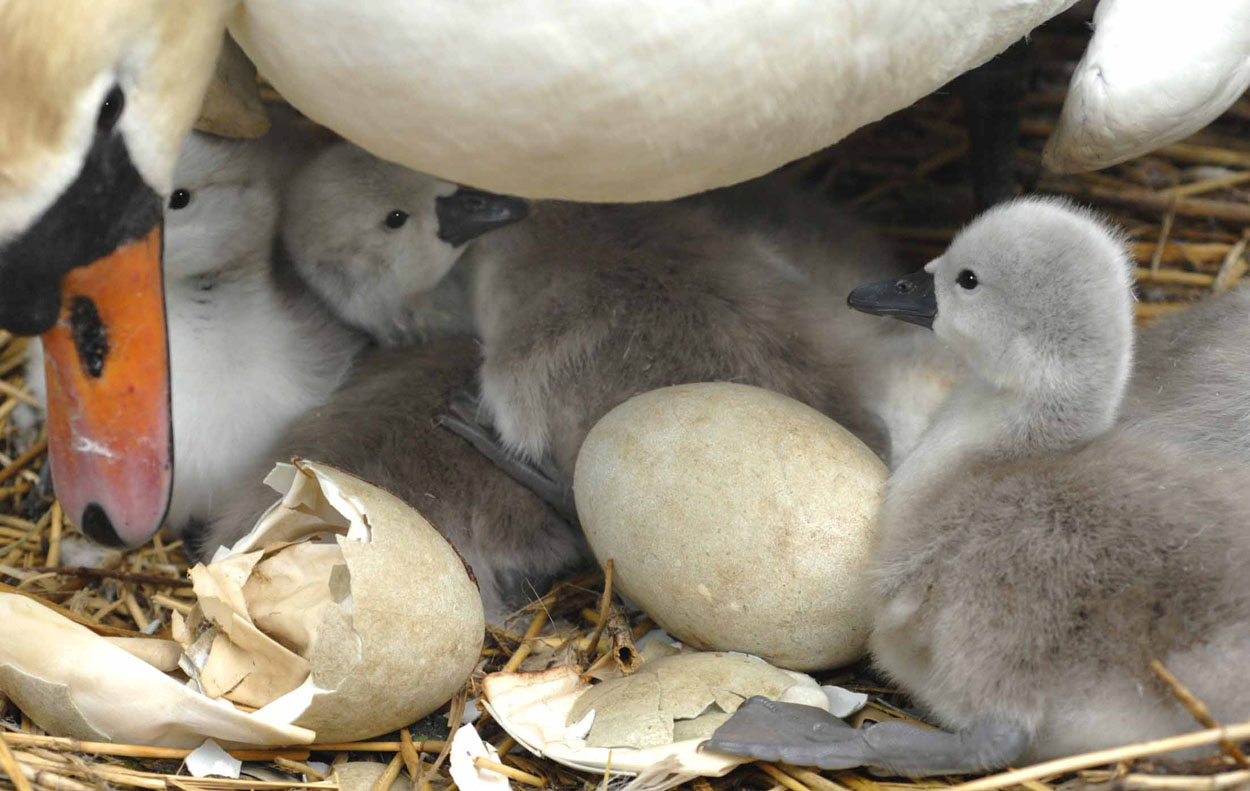
One of the cutest times of the year in Dorset is surely the arrival of the hundreds of cygnets.
The baby swans seem to herald the Summer season which also means that the staff at Abbotsbury Swannery turn into midwives for around a month.

First Cygnets hatched draws the press and families to Abbotsbury Swannery.
Checking reed nests and egg counting just some of the regular duties that the staff undertake.
Certainly, this period of year is very popular with visitors keen to get close-up with the swans and cygnets.
First Cygnets Hatched And Plenty Of Cuteness Overload
The first one to arrive often finds it really well in the media spotlight!
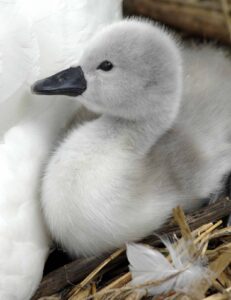
Cygnet at Abbotsbury Swannery.
Press and the media are usually very quick to try to get a cute image of the first cygnet. And this year was no different. A photographer from Getty Images and reporter from the BBC were among the first to capture the lucky cygnet this year.
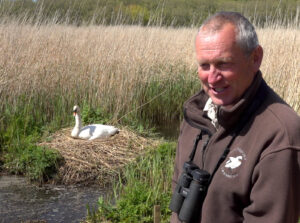
Steve Groves his job is the Swanherd.
In charge of the Swannery is Manager, Charlie Wheeler and his Swanherd Steve Groves who have to deal with the influx of both cygnets and the many visitors to their extensive nest site area on the Fleet lagoon.

Charlie Wheeler Manager of the Swannery.
With a history dating back to the 14th century the Swannery itself was started by Benedictine monks who were based in an abbey in the village.
After Henry VIII dissolved the monasteries, the Swannery was sold to the Strangways family a local landowner and it still remains in the same family today!
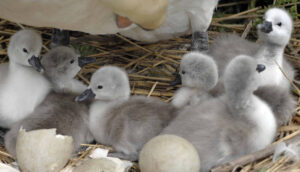
Cygnets at Abbotsbury Swannery.
Sometimes Over 600 Cygnets In One Season
On average each pair raise 5 chicks and with 89 nests located so far there could be as many as 500 cygnets at The Swannery. Some years it has been as many as 600!
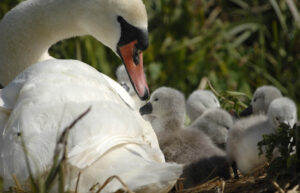
Cygnets at Abbotsbury Swannery.
Currently there are certain restriction for visitors due to Covid. However, its hoped that once in mid- June normal visiting regulations will be back in place in the UK.
As events like the mass feeding of the swans which are now only done when it’s closed to the public. The feeding of corn to several hundred at one time is another spectacle and often the children are invited to take part too. As the only managed colony of swans in the world it makes for some close-up encounters that you would not get any where else.
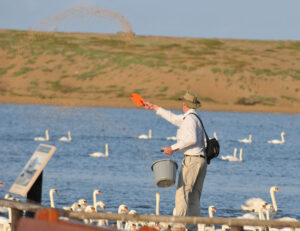
Mass feeding in which the public can also take part should be able to start very soon.
Another spectacle that would have taken place later this year is the biannual round-up!
Again, due to Covid this will now not take place.
Volunteers Are Needed to Round Up Swans
For it requires over a hundred volunteers to help corral the swans using canoes and even people wading out into the Fleet in order the get the birds ashore.
This is done at the time of year when the swans moult and therefore cannot fly.
Following the wettest and trickiest part of the exercise. The swans have veterinary health checks and weighed. Many are inoculated against bird flu and some have blood samples taken to help assess the overall health of the swan community.
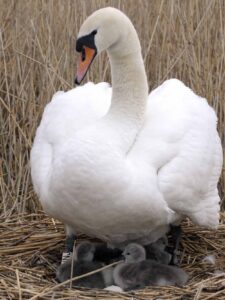
Some of the first cygnets hatched at Abbotsbury Swannery.
Without doubt the best time of year is when the patter of tiny web feet is heard. Stealing the show with antics of the grey fluffy bundles have the crowds heading to the Dorset coast and Abbotsbury.
Often, they partially shelter under their parent’s wings as they are brought on the water for the first time.

Cygnet at Abbotsbury Swannery.
And just as cute is when the cygnets themselves embark on their very first swim!
Ahhh!