




Riot Of Rickshaws Of Delhi A Great Tourist Experience

The apparent chaos that are the streets of New Delhi can be explored unbelievable and quite safely by pedal power. Although not your own.

Human pedal power gets you around the busy market area of Delhi.
Taking charge of a rickshaw that would certainly be an accident waiting to happen!
Setting off from just outside the countries largest mosque the Jama Masjid in what can be described as an extremely bustling and busy area of the city.
There is some trepidation on boarding a rickshaws. As you apparently hand over your life to their hands or rather their feet as the men. And it is men only it seems. That whisk you around the nearby streets in temperatures that can be over 40 degrees.

Tourist happy to sample the rickshaws of Delhi experience!
Although, having just seen those roads, I pondered would there even be space for yet any another form of transport in these narrow alleys and streets?
Rickshaws Of Delhi A Delight
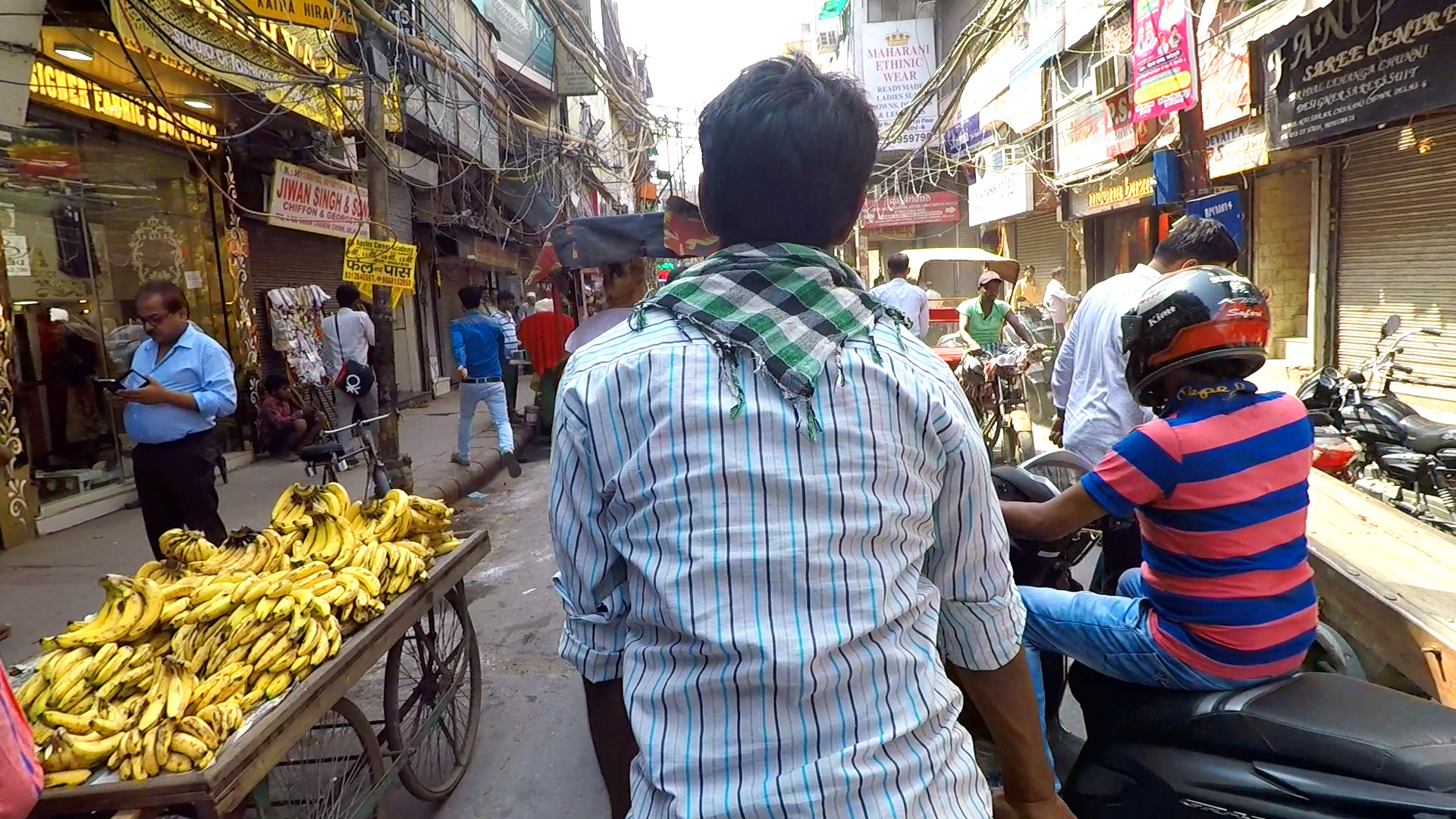
See how the motorbikes use up every bit of space if they can or if you let them!
Cattle carts, Tuk Tuks, a myriad of horn blowing motorbikes fill up every vacant piece of tarmac. And are just some of the vehicles you will sharing the roads with.
Buses, lorries and taxis certainly don’t want to be left out in India. As on some of the wider roads they will sweep past you measured in millimetres rather than inches!
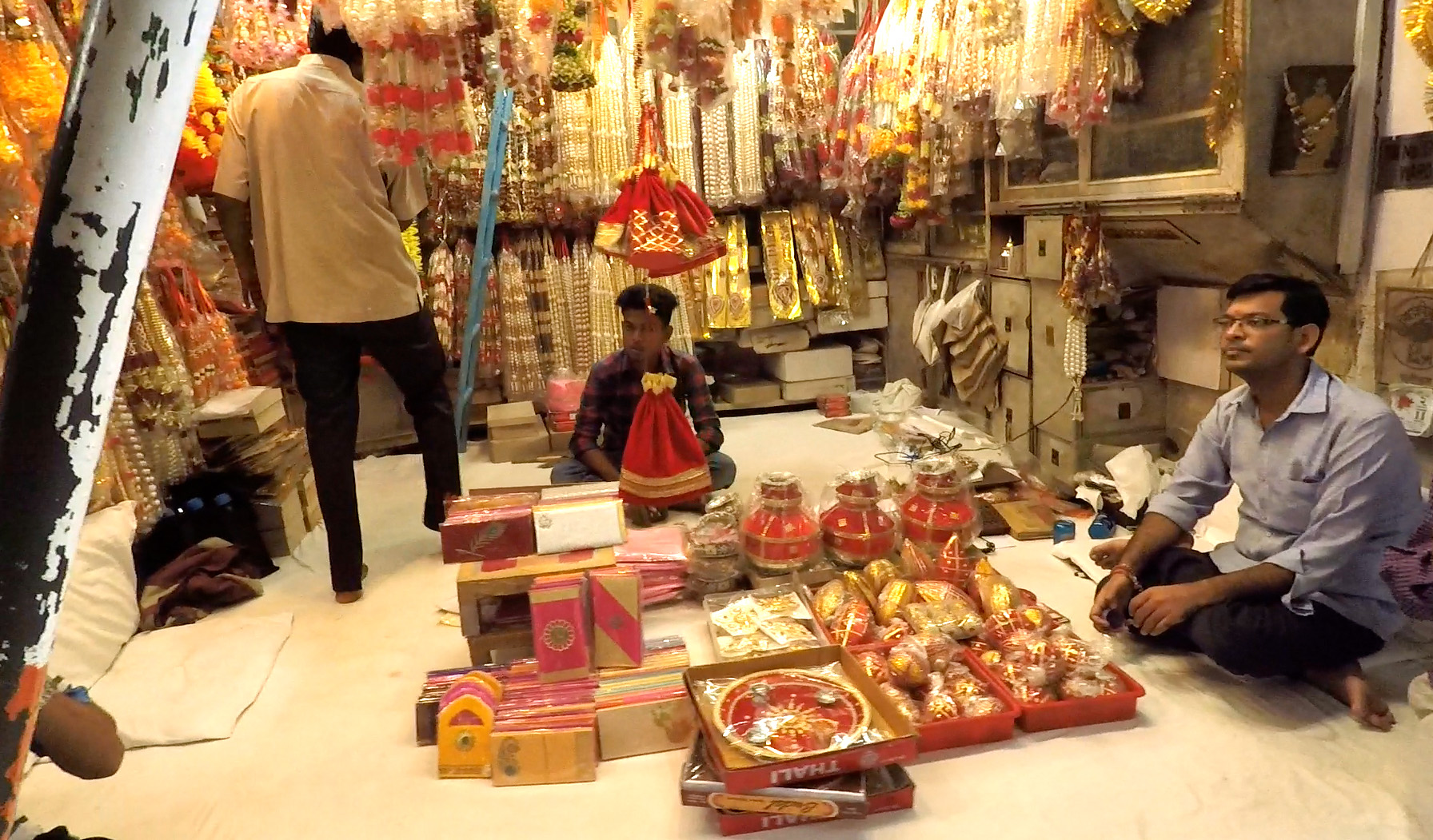
The smells of shops and markets as you tour the streets by rickshaw in Delhi.
The ride starts at a sedate pace and stays that way as you join the first flow of traffic. And before you know it you are now about to enter the next phase. We stop for no one!
Traffic Misses You By Millimetres
Weaving left and then right passing other stationary transport. Then faster vehicles pass on either side . There is no lane discipline and even if there were three lanes marked out the Indians would somehow make it into five!

Busy colourful shops pass by as you are pedaled around the narrow lanes and alleys.
After a brief battle of speed with two other rickshaws we headed for our first turn. Heading into a fairly narrow street but they were to get even narrower later.
Colourful street-stalls often selling food and fruit flashed by and a multitude of smells assaulted my nose as we passed by.

Narrow streets with stalls and vehicles of all types in Delhi.
Now onto a main street here the big boys joined in the fray. The odd bus and lorry plus a legion of tuk tuks and bikes swarmed around us. But the resolute rickshaw rider ploughed on as the game of micro dodge continued.
Rickshaws Pack Narrow Lanes
Next junction and a quick left turn. Pretty sure he checked behind as under-taking rather than over-taking is fair game here. But no jolts, although some good natured verbal jostling with fellow road users. A quick indication more for me to say he was turning down the narrowest of alleys.

The streets get more narrow but still the rickshaws keep coming in New Delhi!
Pedestrian only, no chance here!
Motorbikes coming in the opposite direction and rickshaws too battling with pedestrians.
As a local farmer had set up a veg stall on the floor the wheel passed by his produce shaving his tomatoes by inches.
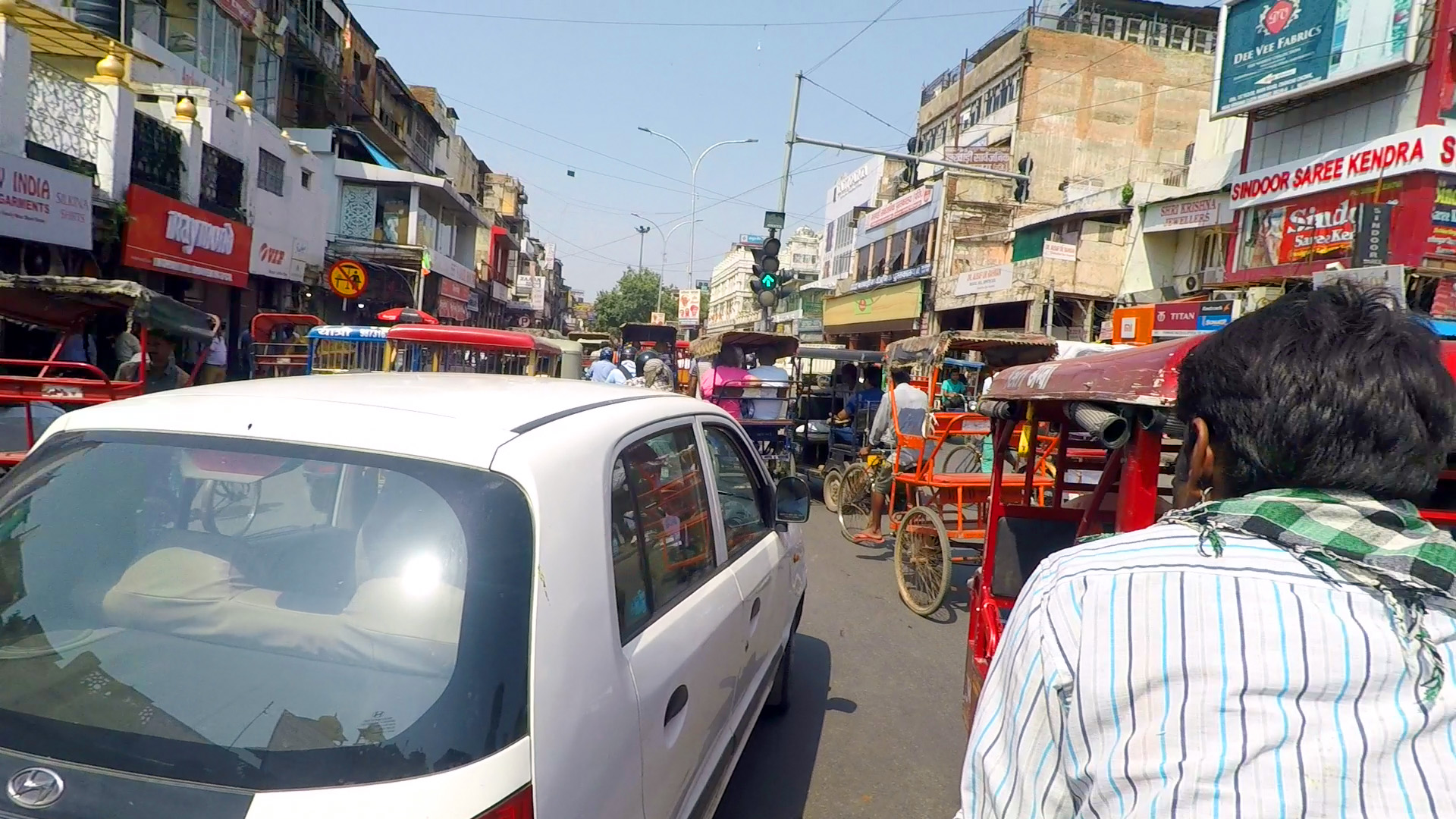
A riot of rickshaws heading around the streets of Delhi my rider keeps going car or no car trying to cut in!
My skilful driver had me back safely just when I was getting to understand the near chaos of it all.
Was it worth it?
Certainly yes, an experienced not to be missed. The smells, the sounds and the mayhem that is Delhi is all there. And here I am still also here to write about too!
The Indian Highway Code:
ARTICLE I: The assumption of immortality is required of all road users.
ARTICLE II: Indian traffic, like Indian society is structured on a strict caste system. The following precedence must be accorded at all times.
In descending order, give way to: Cows, elephants, heavy trucks, buses, official cars, camels, light trucks, buffalo, jeeps, ox-carts, private cars, motorcycles, scooters, auto-rickshaws, pigs, pedal rickshaws, goats, bicycles (goods-carrying), handcarts, bicycles (passenger-carrying), dogs, pedestrians.
ARTICLE III: All wheeled vehicles shall be driven in accordance with the maxim: to slow is to falter, to brake is to fail, to stop is defeat. This is the Indian drivers’ mantra.
ARTICLE IV: All manoeuvres, use of horn and evasive action shall be left until the last possible moment.
ARTICLE V: In the absence of seat belts (which there is) car occupants shall wear garlands of marigolds. These should be kept fastened at all times.
ARTICLE VI: Rights of way: Traffic entering a road from the left has priority. So has traffic from the right, and also traffic in the middle.
Lane discipline (VII/1): All Indian traffic at all times and irrespective of direction of travel shall occupy the centre of the road.
ARTICLE VII: Roundabouts: India has no roundabouts. Apparent traffic islands in the middle of crossroads have no traffic management function. Any other impression should be ignored.
Over taking Is Mandatory
ARTICLE VIII: Overtaking is mandatory; every moving vehicle is required to overtake every other moving vehicle, irrespective of whether it has just overtaken you. Overtaking should only be undertaken in suitable conditions, such as in the face of oncoming traffic, on blind bends, at junctions and in the middle of villages/city centres. No more than two inches should be allowed between your vehicle and the one you are passing — and one inch in the case of bicycles or pedestrians.
ARTICLE IX: Nirvana may be obtained through the head-on crash.
ARTICLE X: Reversing: no longer applicable since it’s a matter of pride as no one will be ready to reverse his/her vehicle.
Most Indian road users appear to observe a version of the Highway Code based on a Sanskrit text or just make it up as they drive!
Thank you to those whom created this most amusing list now shown here in English!
Info: Rates can vary from a couple of hundred rupees to a more organised excursion done through a tour or travel company costing a lot more but however you decide what is right for you. Just do it!



I love Delhi but would not want to drive there. Interesting piece!