




BURIED SECRETS OF FUNERAL MUSEUM VIENNA

What does a Hollywood actress; a Viennese taxi driver and Beethoven have in common?
It’s not by the way, the start of a convoluted joke.
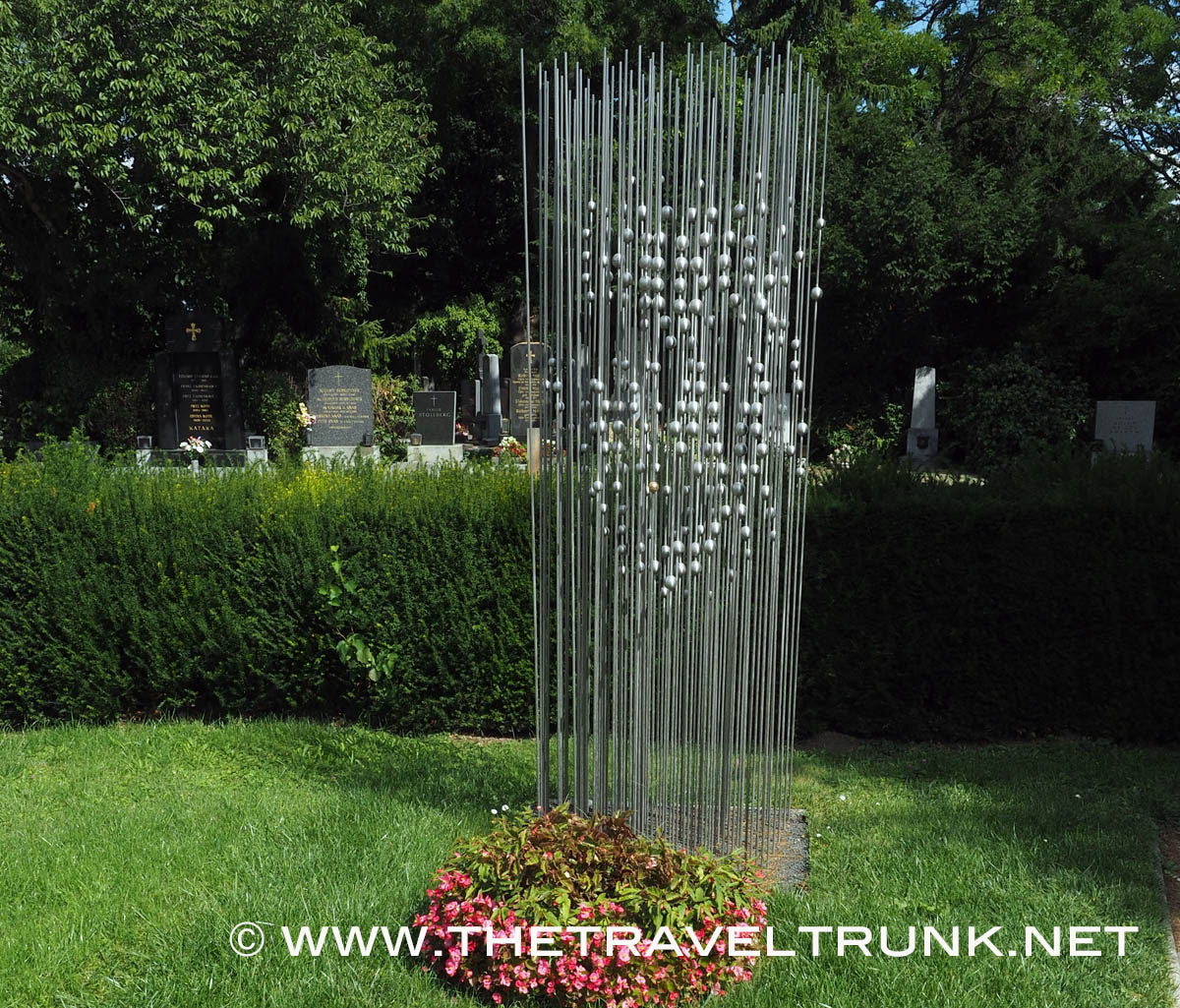
Hedy Lamarr’s marker at Central cemetery ( Zentralfriedhof) Vienna.
All three are either interred in the Central Cemetery in Vienna. Known there as the Zentralfriedhof. Or have memorials erected to them in the largest cemetery in Europe.
In the case of the first person she was a very beautiful film actress Hedy Lamarr. A film star of some note. Plus she was also an inventor whom today we nearly all use. An idea she conceived way back in the 1940’s and is now used in Wi-Fi.

Milan the taxi driver..
The second a taxi driver Milan. So proud of his trade that an image of him driving his Mercedes hire car is engraved in great detail on his polished black granite gravestone.
Beethoven of course the 19th century composer. He resided in many houses in and around Vienna in his lifetime. However, he is settled into one place. Surrounded by fellow musical giants like that of Brahms, Strauss and Schubert!
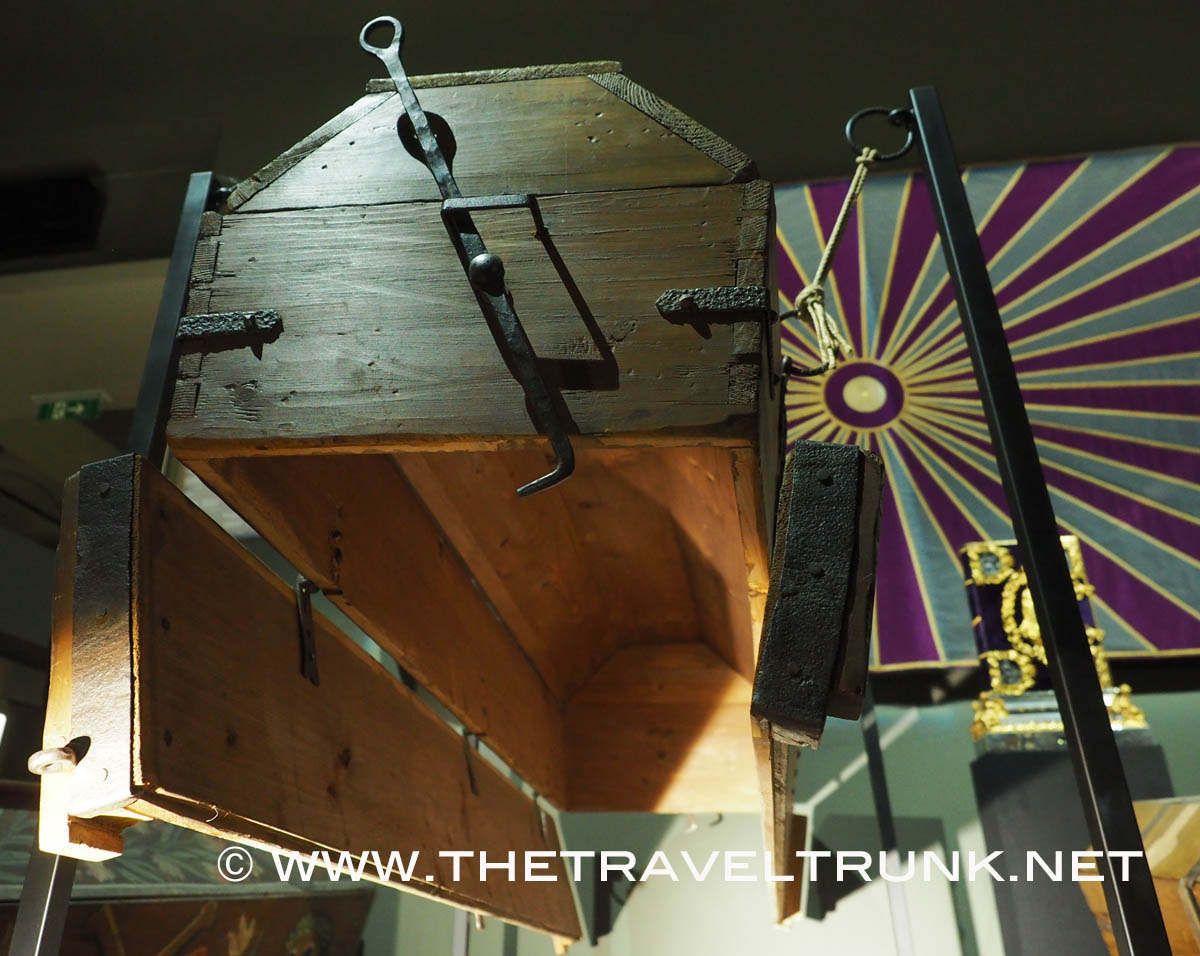
A re-usable coffin Funeral Museum.
Certainly the cemetery deserves a diversion from the city centre. Being the largest cemetery in Europe finding some of those famous and the not so famous can be quite a task. As it covers over 590 acres and there are over 300,000 graves.
However, also buried in the grounds close to the main entrance is a fairly new addition. A dedicated funeral museum called the Museum of Funeral History and housed in the basement of classic Art Nouveau building.
BURIED SECRETS OF FUNERAL MUSEUM

Old and modern coffins at the funeral museum.
Continuing with a constant flow of the newly deceased the cemetery staffs are not just content with keeping all those graves in pretty good shape. But the gardens, lawns and public areas well trimmed and presented too.
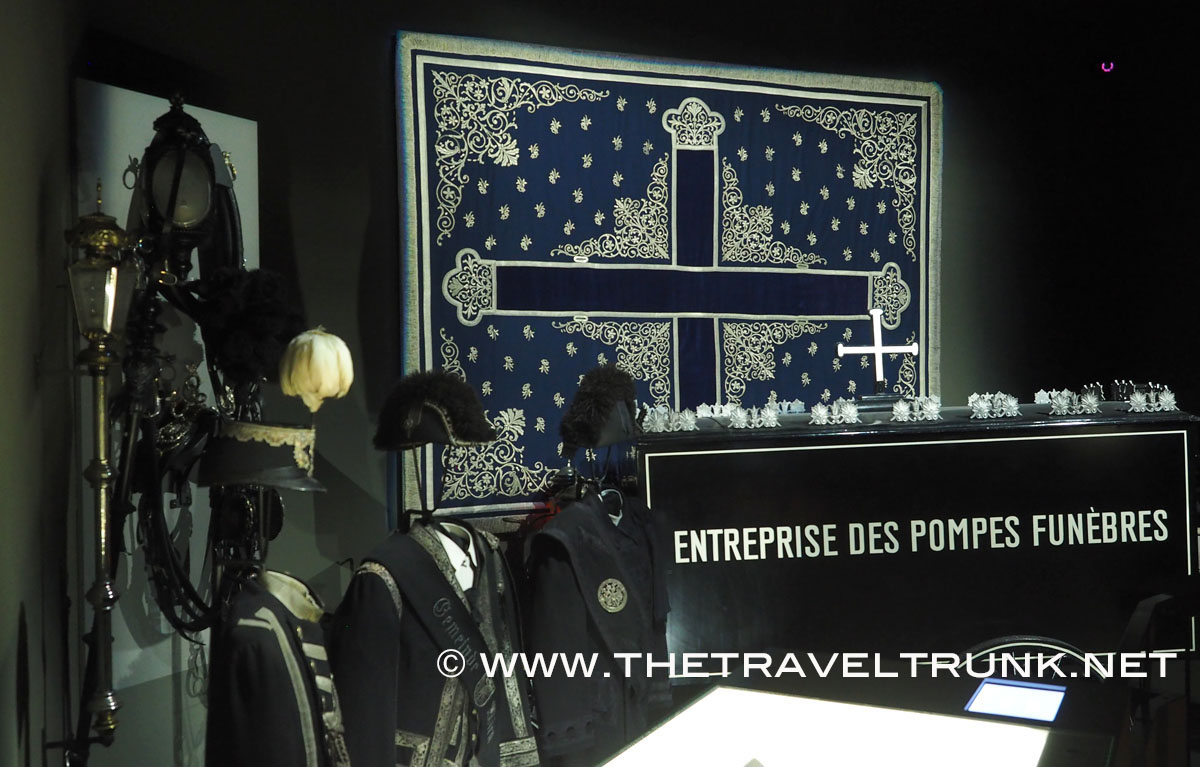
The trappings of funerals.
Displaying hundreds of artifacts in the museum. Those being used by the funeral businesses, showing and explaining more about the trade of death.
As well as new and old styles of coffins. The ornate items used to drape them for funeral services. Including clothing and tools of trade. Cremation urns through the ages. Including an urn you can decorate yourself.
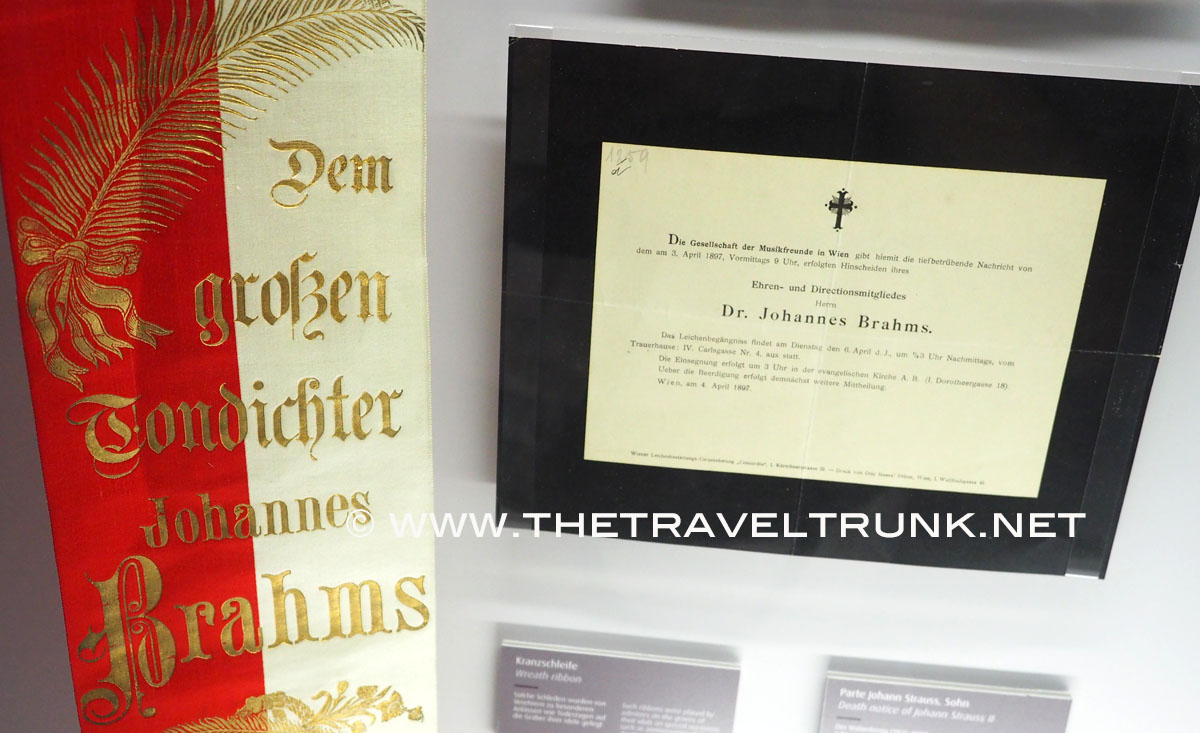
Funeral notice and flower ribbon for Brahms in the funeral museum.
One special item is a re-usable coffin. Cleverly designed in the 18th century. This allowed what looked to be a perfectly normal coffin from the top to be used for a conventional internments.
RE-USABLE COFFIN
However, once lowered into the ground and one assumes after the mourners have left the graveside. A rope is pulled and the base of the casket opened and the corpse would fall out allowing it to be used again and again.
This wood saving idea brought in by Joseph II in 1784 only lasted around 6 months and again bodies had to be placed in a sealed coffin and buried. Although I understand that even today Muslim burials have to adhere to the coffin internments rather than just in shrouds, which is traditional.
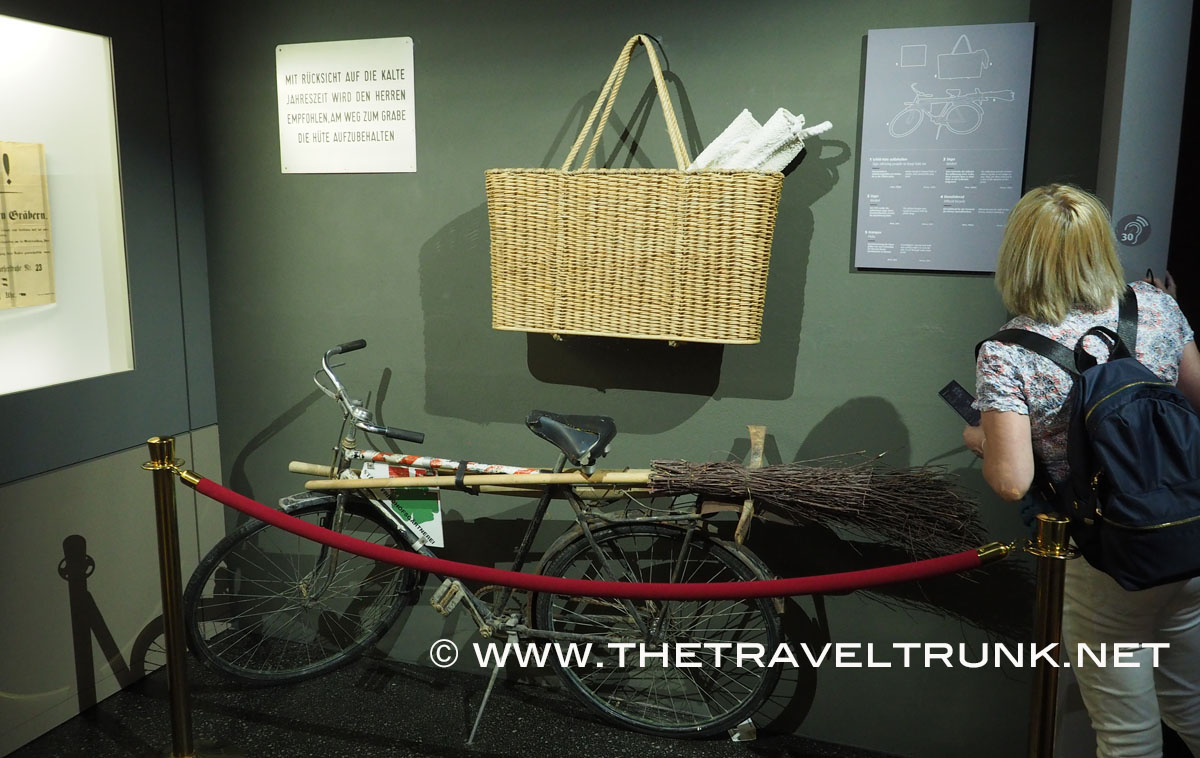
Tools of the trade at the Funeral Museum in the Central cemetery ( Zentralfriedhof) Vienna, Austria.
Walking around the huge graveyard the sound of a tap or tapping of mallet on chisel. As a stone mason dexterously carved letters of the name of a recently buried person whom had now joined a relative or friend for all time.
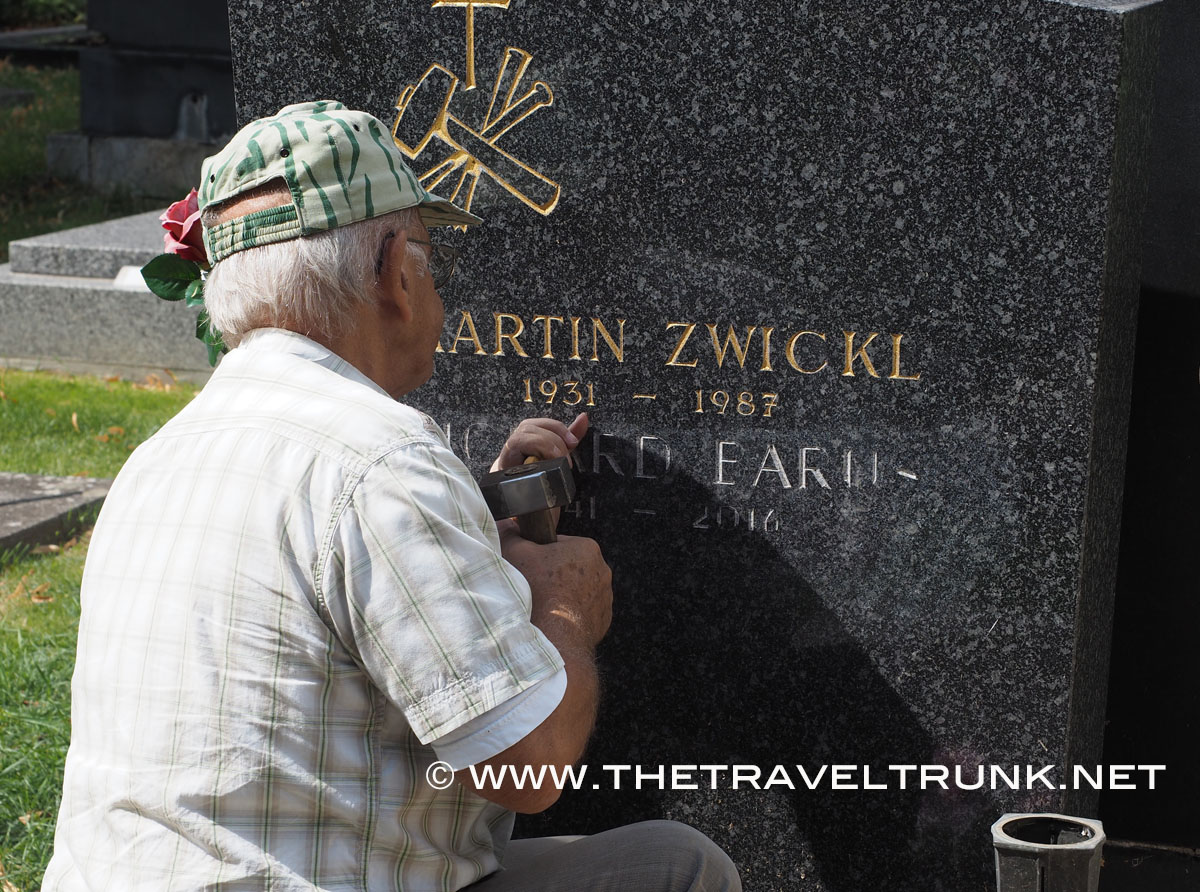
Letter cutting keeping the graves up to date in the Central cemetery Zentralfriedhof) Vienna, Austria.
This is a vast cemetery complex and probably requires more than one visit. But it is a never the less a fascinating place where quirky and tradition meet, mixing really rather well together.
Classic Film Location Too
Used as a location in the classic black and white film The Third Man
In all there have been over 3million internments. Today there are many multi faith sections with Catholic, Protestant, Jewish, Muslim, Russian Orthodox and Buddhists having plots within the complex.
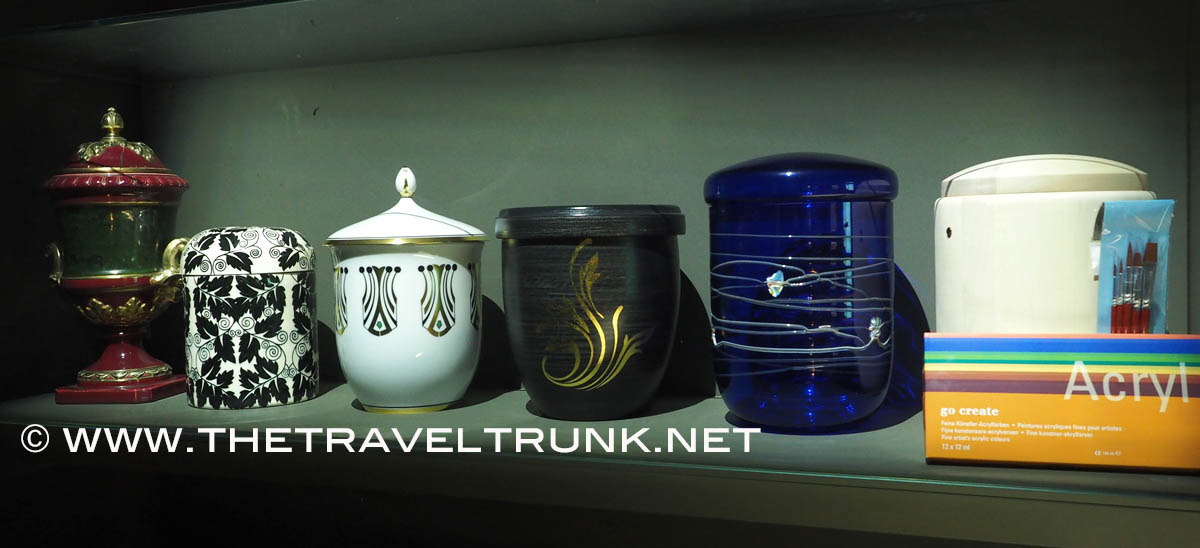
Cremation urns old and new at the Funeral Museum in the Central cemetery (Zentralfriedhof) Vienna, Austria.
Rather like Beethoven’s very traditional grave marker, then Hedy Lamarr’s ultra contemporary one.
And as for Milan the taxi driver well I will leave that one with you to decide where that one falls?
Entrance fee: €6
http://www.bestattungsmuseum.at/




Sounds a fascinating place.