

Visit Buckingham Palace Garden The Queen’s Back Garden!
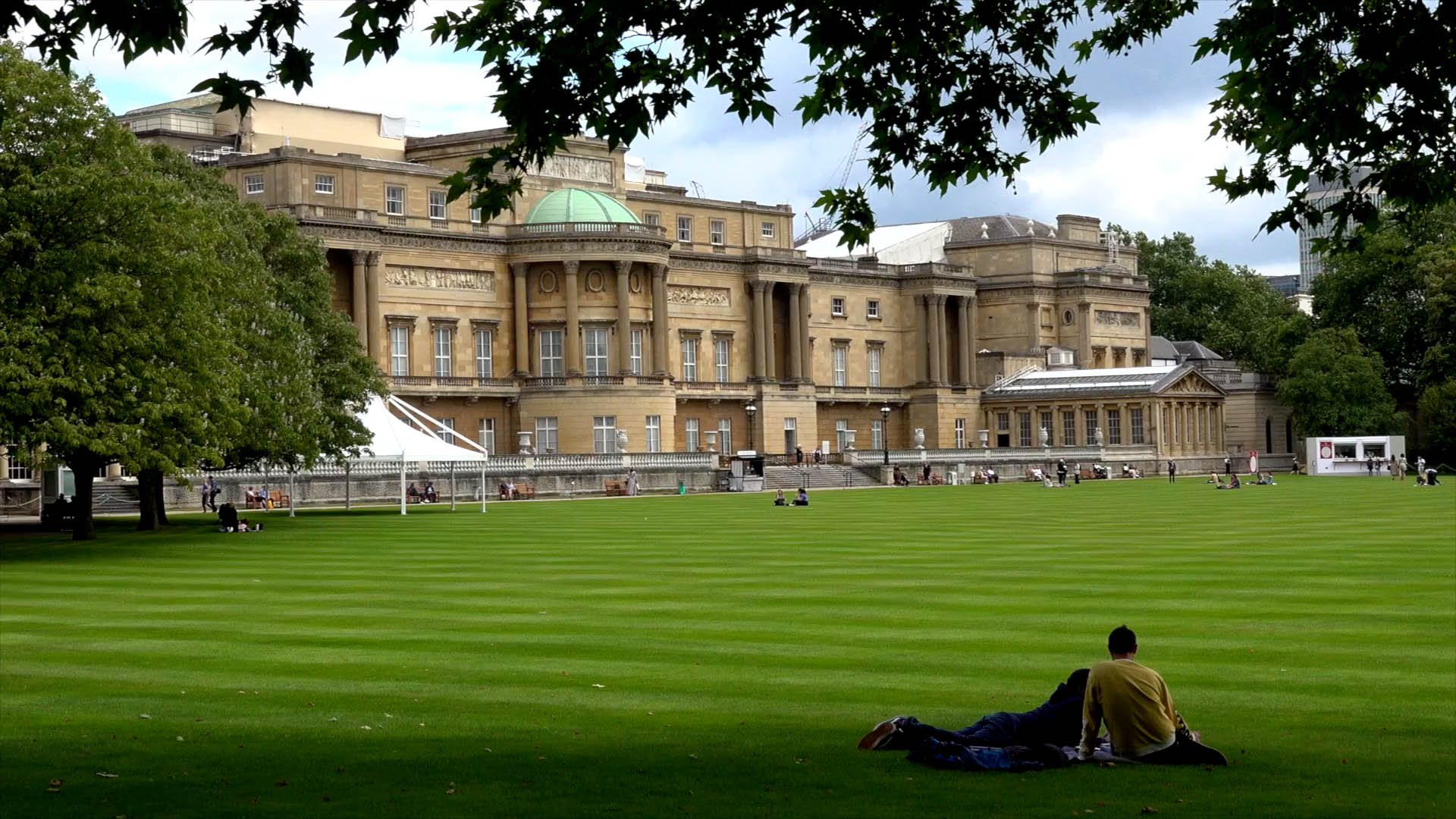
Meaning that Produce Today the garden at Buckingham Palace opened for visitors (Friday, 9 July 2021).
The extensive Royal walled garden will be open until 19th September.
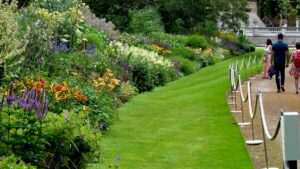
The herbaceous border at Buckingham Palace Garden which is now open to the public.
For the first time the gardens of Her Majesty’s The Queen’s official London residence can be explored through a self-guided tour.
With an exceptional demand for tickets the opening period has been extended to 50 days and available on dates throughout July to September 19th.
Visitors will be free to explore a route through the garden. That includes a 156-metre long herbaceous border adjacent to the Palace.
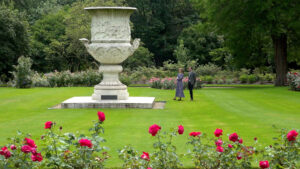
The Rose Garden at Buckingham Palace. The Giant Waterloo Vase!
There are many Plane trees planted in the gardens with two named after Queen Victoria and Prince Albert. In all over 1,000 trees are within the walls.
The walking route allows access around the 3.5 acre lake which also has 5 beehives on a central island within it.
This unique opportunity allows the chance to enjoy a picnic on one of the sweeping lawns at the rear of the palace.
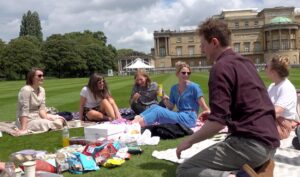
Picnic at the Palace.
There Are Just A Few Restrictions
There are some restrictions. Meaning that no glass bottles or glasses and no alcohol can brought in but otherwise it’s a very relaxed and welcoming experience.
Without doubt the Rose Garden is a highlight. Along with a delightful summer house and wildflower meadow areas. Plus a rare chance to view the huge Waterloo Vase made for Napoleon. This is part of guided visit which carries an additional charge of £6:50. This tour is available numerous times during the opening times.
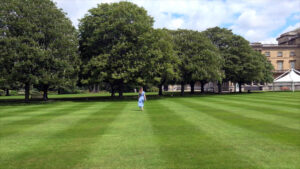
Strolling at the Palace.
Covering 39-acre the garden dates back to the 1820s when George IV turned ‘Buckingham House’ into a Palace.
Despite its urban location, the garden is home to a remarkable array of flora and fauna.
These include numerous rare native plants seldom seen within the London area.
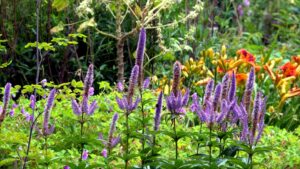
Buckingham Palace Garden now open to the public.
Who Knew That The UK Collection of Mulberry Trees Were There?
The garden is a rich biodiverse habitat, with over 1,000 trees. Including the National Collection of Mulberry Trees along with 320 different wildflowers and grasses well established and thriving in the city.
Produce from the garden itself such as botanicals are used to make Buckingham Palace Gin. Including lemon verbena, hawthorn berries, bay leaves and mulberry leaves.
Daily talks by enthusiastic Visitor Services Wardens and trails for families are included as part of the visit.

Bench buddies at the Palace.
As well as the plants themselves, art and craft activities will be available in locations around the garden for visitors with children.
Mondays in July and August (from 19 July) will be the start of that. Family Festival days are planned on 26 and 30 August, where Warden-led family tours will also be available.
A temporary shop in the grounds will have for sale a new range of Palace summertime products. Many have been launched to mark the opening of the garden to the public for the first time.
Featuring designs inspired by royal ceremonies and summer flowers. Items include picnic blankets, cotton napkins, a reusable water bottles and a sandwich bags.
If you don’t bring your own picnic then you can pick up some Palace strawberry and champagne jam or perhaps some buttery shortbread biscuits to add to your food hamper at Buckingham Palace or to take home.
Buckingham Palace Garden facts and figures:
- In 1762 Queen Charlotte established a menagerie in the garden. It included an elephant, monkeys and one of the first zebras ever seen in England.
- Since 2000 the garden has held the National Collection of Mulberries. Mulberry trees were first planted in the garden by James I in 1608.
- Traditionally, The Queen hosts three Garden Parties a year at Buckingham Palace. Each is attended by 8,000 guests, who consume around 27,000 cups of tea, 20,000 sandwiches and 20,000 slices of cake.
- Since 2008 the island in the lake has been home to five beehives, which produce around 160 jars of honey a year for use in the royal kitchens.
-
The Rose Garden Is A Must Visit
-
Each bed is planted with 60 rose bushes of a different variety, and no two adjacent beds are of a similar colour.
-
- The garden’s Waterloo Vase weighs an estimated 19 tonnes and is an impressive 5.5m (18ft) tall. It was commissioned by the French Emperor Napoleon in anticipation of his success in battle, but after his defeat at Waterloo in 1815 it was presented to the future George IV.
- A Recycling Centre was established in the garden in 1991 at The Queen’s request. It recycles 99% of all green waste from London’s royal gardens.
- The white helleborine, a native orchid whose numbers are declining, was discovered growing in the garden in 2013. It had not previously been seen in London since 1900.
- The garden’s meadows, which were once grazed by cows and goats, are now home to more than 320 different types of wildflowers and grasses.
- The garden plays host to more than 50 types of bird each year, of which 30 are resident, and is home to 300 different types of beetle.