
Telegraph Museum Now Tells Its War Story

Today we take worldwide communication as almost a basic requirement of day to day life.
However, in the 19th century when the first telegraph cables were laid under oceans that was almost a world shattering event.
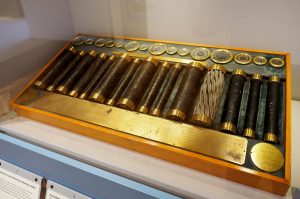
Cable sections used from India.
Being able to speak directly came later, then later again TV and now internet and data traffic is the norm through them nowadays.
For the UK these vital cables that connected the then Commonwealth mainly all came into the country through a tiny cove in West Cornwall.
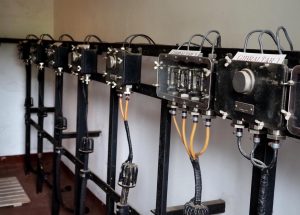
The Cable Hut Porthcurno where the cables once came in.
The pretty sandy beach at Porthcurno is where deep beneath it are buried a string of cables that link the world, to the UK.
There has been a Telegraph Museum in the village for a number of years but more recently part of it has been extended into the former World War II bunker that was built to maintain communications during the 5 year long conflict.
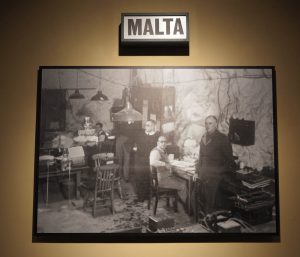
The team in Malta during World War II.
Built by many local Cornish miners the extensive twin tunnel bunker system construction has been refurbished and now holds many displays and has recreated communications offices and workshops of that period.
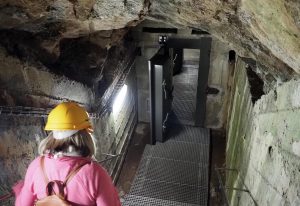
The escape tunnel at the Telegraph Museum Porthcurno.
Even the 100step escape tunnel to the surface carved out by the miners is open. Here visitors can see how the civilian and military staff would have got out in case of invasion or bomb damage from the German attackers.
This Cable and Wireless facility were vital for people like Winston Churchill who could keep in regular touch with the American President. Other communications included decrypted German cyphers done at Bletchley and passed instantly over the cables to military commanders all over the globe.
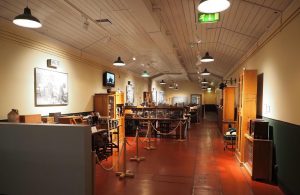
The World War II bunker at Porthcurno, Cornwall.
The main building itself houses collection of items telling the story from the very first cables and the people who laid them and the technology of that time and how they operated them.
Stories of how some of the telegraph operators in very remote parts of the world was highlighted by one small exhibit of a dry hard ship’s biscuit being converted into a plug that needed to be replaced so the operator used what he had to do that!
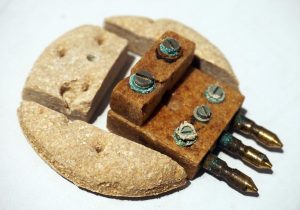
Ship’s biscuit turned into a plug by one remote member of staff.
There are plenty of exhibits that help to educate the youngsters and keep them amused even some dressing up which, the adults also have fun with too.
The stark concrete bunker itself now painted in its camouflage pattern of that time is an excellent extension the Telegraph Museum. It has always been very popular, but now even more so.
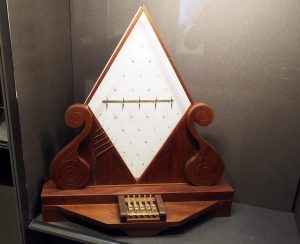
The Telegraph Museum Porthcurno, a Victorian alphabet indicator.
A neat and friendly staffed café plus very clean toilets complete the building with parking nearby to the front.
No visit to the museum is complete without a trip to the beach or certainly to the cable hut 200 metres down the slope to the sands where you can see where the cables from around the world did come in and were connected.
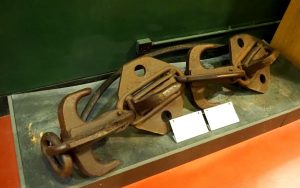
Grapnel used to catch cables under the sea.
And if you wonder how do they repair, find, and retrieve the cable again? For this they use a large steel grapnel dropped to the sea bed and towed across the cable until they catch it. Then they can pull it up to the surface and repair it at sea!
For my visit to the county I was hosted by the Mullion Cove Hotel self-catering apartments. This is an attractive and very quiet harbourside location at Mullion Cove on the Lizard Peninsula