
OXFORD
WAY OUT WEST FOR WIZARDS AND FLYING SAUCERS! ‘Twinned with Roswell New Mexico’ said the…





IT WAS like something out of Wacky Races. A motley crew comprising various nationalities, ages and professions, we bounced down a dusty orange dirt track in a sturdy old bottle green Land Rover that had seen better days on the trail of a convoy of other vehicles.
What we had in common was that we were all in search of the elusive leopard. Not elusive in general, because Sri Lanka is full of them – its 14 National Parks are home to the world’s highest density of leopards in fact. But this one in particular was proving elusive to us.
We were all on a day safari in Yala National Park in Kirinda, southern Sir Lanka, and by this stage we’d notched up elephants, mongoose, spotted deer, crocodiles, peacocks, wild boar and water buffaloes plus a myriad selection of colourful exotic birds.
But after an hour-and-a-half of double checking every old log and dead branch to see if it was him, we’d yet to find our leopard. But then, just as we’d almost given up hope and had pulled up beside six other vehicles, each one filled with excited observers, cameras in hand waiting for the photo op kill, we saw him. There he was, lazing by a dried up pond, the handsome, nonchalant A-lister of the jungle getting papped by a few dozen tourists.
There are a lot of animals in Sri Lanka. There are a lot of animals in countries all over the world, of course. But here, both travellers and locals seem to spend much of their time up close and personal with them – slowing down while passing wandering herds of cows on the road and giving stray dogs a wide berth in rural villages.
My chalet on stilts in Yala Village, beside the vast 97,878 hectare National Park, came with a Sri Lankian twist on the usual ‘beware of the dog’ sign – Beware of the Elephants.
I didn’t see any wandering around, although a waiter told us that one had come into the tourist village during the night. But in the morning I watched a pack of baby wild boar scamper past my window. Walking to breakfast a few minutes later I stopped to photograph a monkey who was refusing to budge from his position in the middle of my path.
Sri Lanka is full of accidental surprises like my monkey encounter. But then, it’s not at all surprising that this should be so – the word serendipity is derived from Swarnadip, the Sanskrit name for Sri Lanka. So ‘happy accidents’ are par for the course.
My overnight in Yala – the most famous of those 14 national parks – came mid-point during my six night visit to Sri Lanka, and was as different to the other stops on my itinerary as elephants are to crocodiles.
After landing in Colombo, the island’s largest city and de facto capital, my tour group headed north-east to Habarana, in what’s known as the cultural triangle in the centre of the island, which takes in such sites as the sacred cities of Anuradhapura and Sigiriya.
One of Sir Lanka’s seven UNESCO World Heritage sites, climbing Sigiriya is like going up the Eiffel tower in Paris – if you’re in the area it simply has to be done.
Known as lion rock, this ancient rock fortress built during the reign of King Kasyapa, circa 473AD, is one ofSri Lanka’s major attractions and its summit, covering around 1.6 hectares, can be reached via steep steps past an extensive network of gardens, frescoes of semi-naked women and the so-called Mirror Wall with its smooth reflective glaze and 1000-year-old graffiti.
Your reward for all that exertion is a panorama of magnificent views from the top, stretching for miles and overlooking verdant green jungle. If climbing the 180m-high ‘palace in the sky’ is too daunting you can stand at the bottom and gaze skywards in awe.
Touring the whole of Sri Lanka, or as much of it as you can manage, is possible. But the hours spent on the road, on an organised tour or with your own private driver are long, although they are worth it.
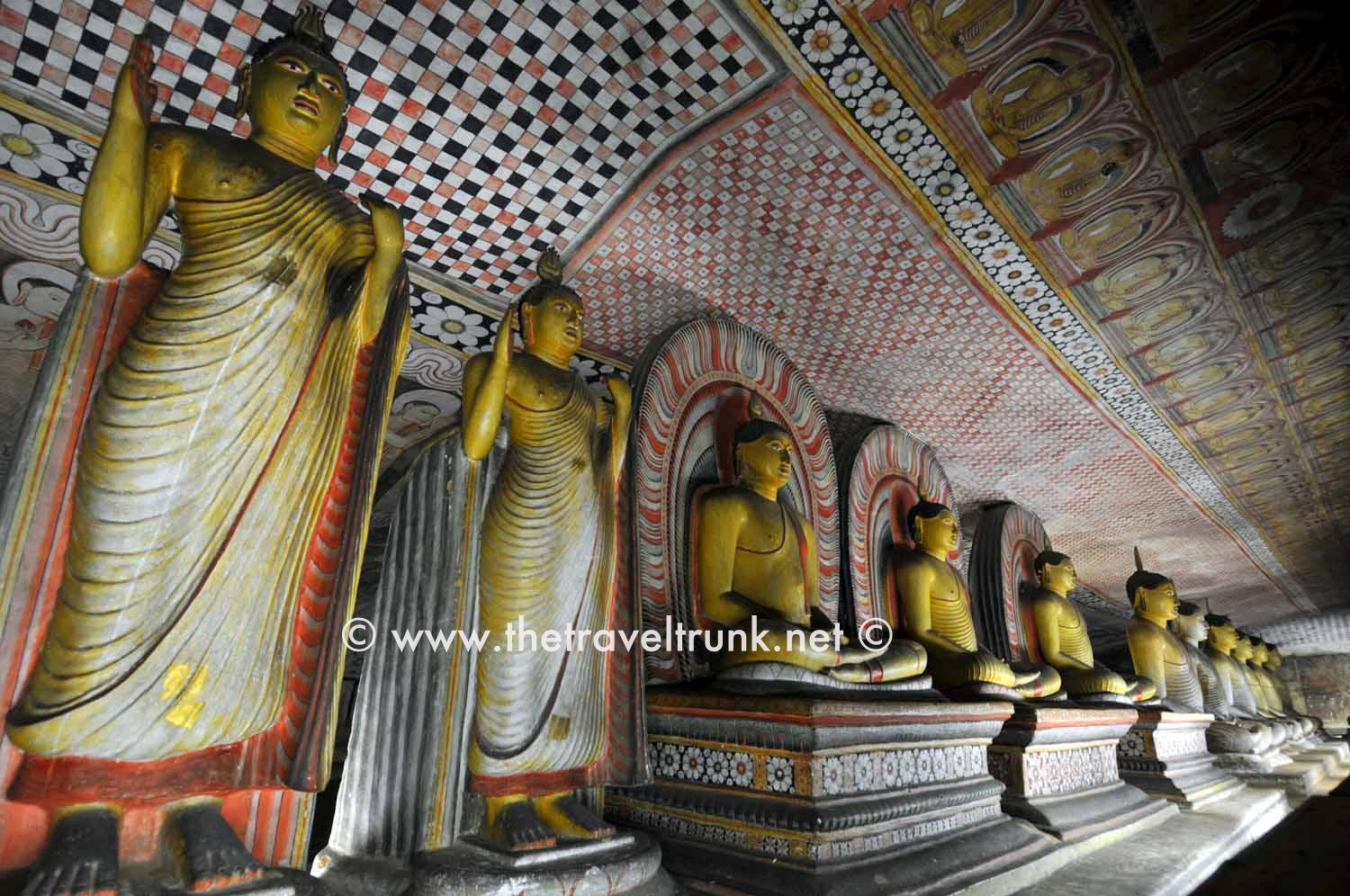
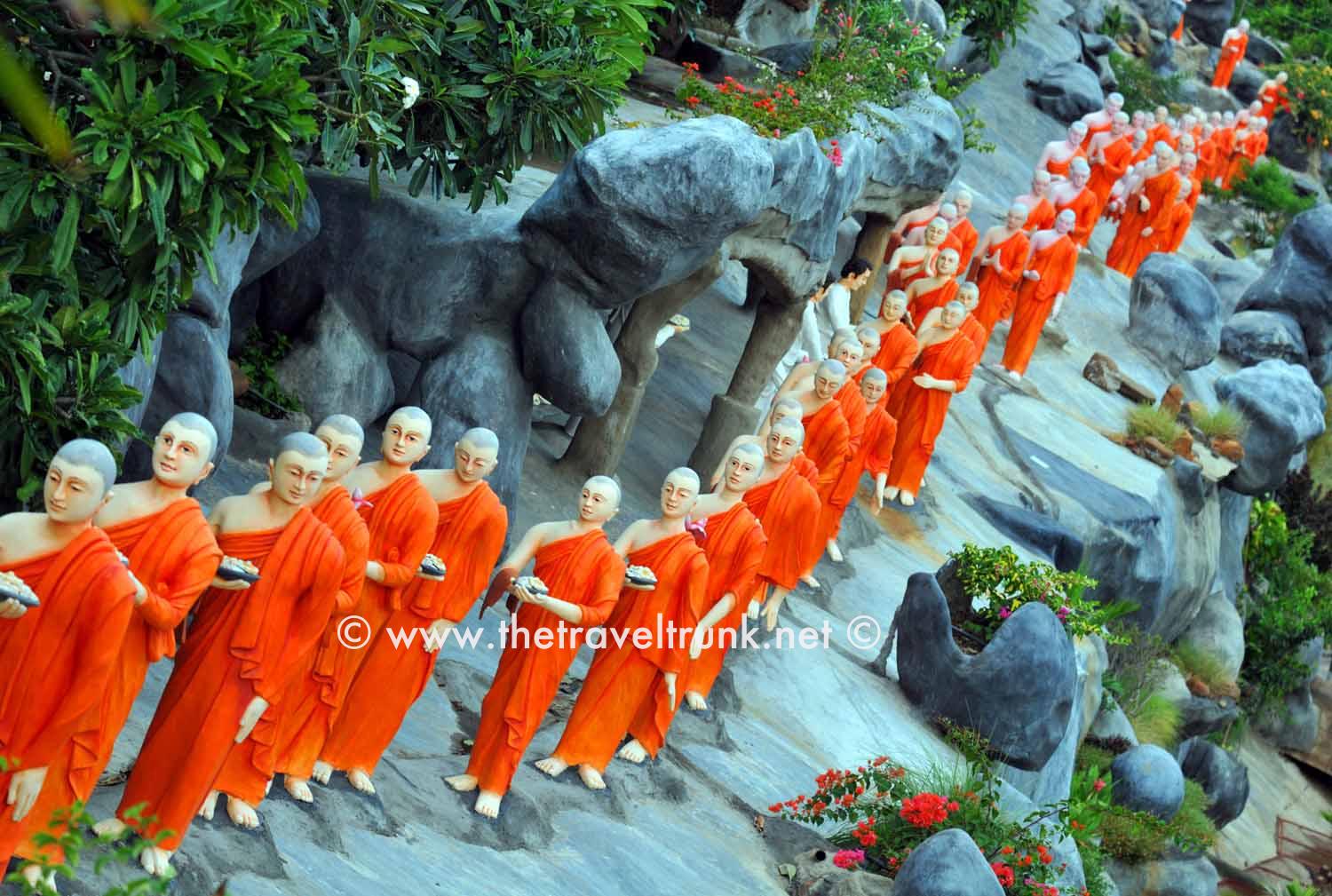
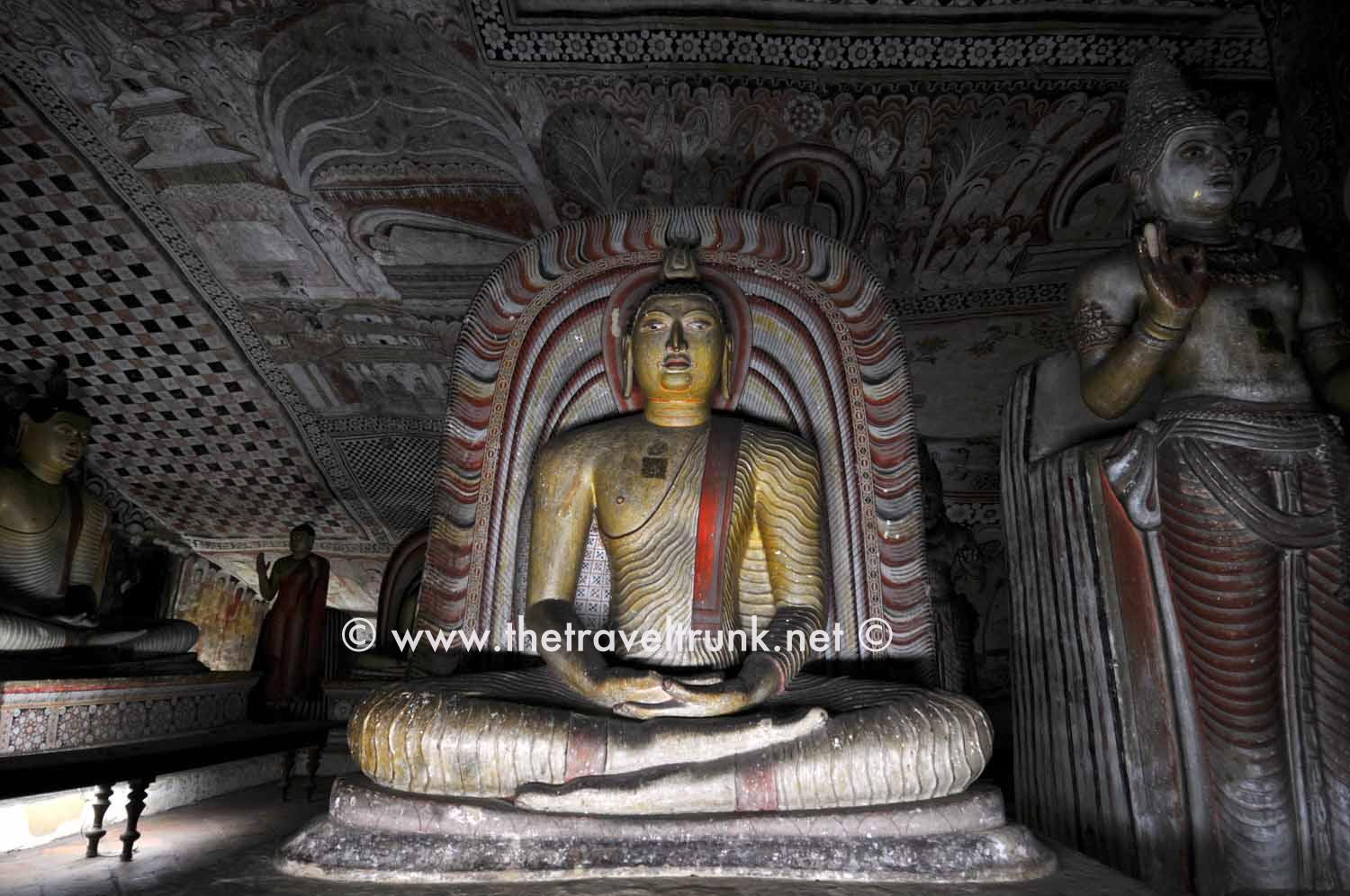
It’s often much easier to pick a region – tourists usually opt for the cultural triangle – and opt for sightseeing depth over breadth. One of Sri Lanka’s richest architectural treasure troves is also found in the cultural triangle region, in a small town called Dambulla. It’s home to exquisite cave temples created in a natural hollow beneath a massive rock outcrop that dates back to the first century BC which are filled with hundreds of carved and painted statues, including two huge reclining Buddhas.
Or you could pick the south-west, where you’ll find Galle, a UNESCO World Heritage site founded by the Portuguese in the 16th century. It reached the height of its development in the 18th century before the arrival of the British and it is south-east Asia’s best example of a fortified city built by Europeans.
From Habarana, my group took the road south via the scenic city of Kandy, located roughly centre of this teardrop-shaped island. We passed spice farms and rustic villages until we came to Nuwara Eliya, a hill retreat in what’s known as tea country, where mango trees give way to manicured English-style lawns. Founded by Samuel Baker in the colonial era, Nuwara Eliya is the island’s highest town and also boasts, perhaps surprisingly, excellent trout fishing. The winding road took us higher and higher as our vehicle was chased by monkeys until we arrived for a tour around Glenloch Tea Estate, 1500 metres above sea level, one of the many tea factories for which this area is famous.
From colonial to contemporary, hot and dry to humid and wet, Sri Lanka can’t be summed up as one thing – it’s neither ‘this’ nor ‘that’. It’s a variety of different experiences, depending on where you go and when, how you travel and where you stay. And of course, it also boasts those wonderful serendipitous monkey sightings en route to breakfast.
Tourist Information
www.srilanka.travel



You can unsubscribe at any time by clicking the link in the footer of our emails. For information about our privacy practices, please click here to view our privacy policy.
We use Mailchimp as our marketing platform. By clicking below to subscribe, you acknowledge that your information will be transferred to Mailchimp for processing.

All website content and photographs copyright © 2026 The Travel Trunk unless otherwise stated.
Privacy Policy | Terms & Conditions | News Feed | Site Map | Contact