

War Graves Museum Visit In The Pas De Calais

A visit to the Pas de Calais area in Northern France is not complete unless you have headed for Arras. And the Commonwealth War Graves Commission (CWGC) museum and visitors centre.
Located near to many of the most famous war cemeteries in the area. It is found at Beaurains, on the outskirts of Arras. The new facility was opened by HRH The Princess Royal, last year.
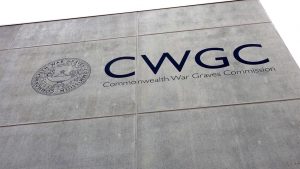
The Commonwealth War Graves Commission museum and visitors centre Arras.
This visitors centre, museum and workshop supports the work of many staff. Using their various trades look after the hundreds of war cemeteries not just in France, but around the world.
Viewing the Commission’s team of skilled craftsman as they work with stone, metal or woodwork.
Taking a guided tour of their workshops to see the staff going about their normal work as they continue their century long task of caring for some of the world’s most impressive monuments to the fallen.
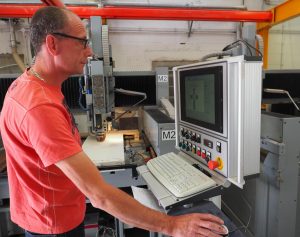
CAD control for carving new grave stones at the Commonwealth War Graves Commission visitors centre.
The CWGC Experience is very much a unique opportunity for visitors to fully understand the extraordinary work that the Commission undertakes every year and has done for the last century.
With 23,000 Cemeteries Worldwide
Having 23,000 cemeteries around the world the millions of gravestones, thousands of memorials and their gardens, there gates and ironwork all require constant maintenance.
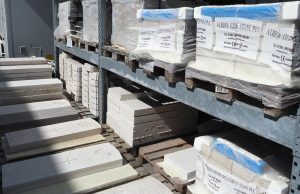
New stone from Portland and finished stones ready to be sent any where around the world.
And at the centre you can watch the different artisans at work as they carry out their various trades through the glass fronted workshops.
The other trades needed by the commission can also be seen at work, blacksmiths and metal workers with their forges and welding torches.
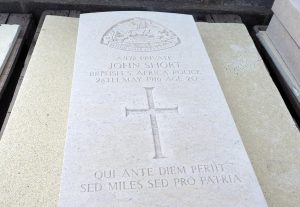
Finished stone at the Commonwealth War Graves Commission.
Carpenters planning, cutting and carving items like replacement wooded cemetery gates and crosses that have weathered over time. With many cemeteries now over 100 years old, maintenance is constantly required.
Whilst visiting I saw gravestones being engraved to be sent to cemeteries in Alexandria in Egypt, Zambia and Northern Ireland.
These replacement stones are often ones that have weathered badly or have been damaged over time.

The Canadian Vimmy Ridge memorial stands high above the fields of Flanders.
Although, sometimes through DNA research carried out through the CWGC a former soldier’s body could be properly identified. Then a brand-new gravestone can be prepared for them, complete with a newly engraved unit badge and their name on it.
On average about 40 soldier’s remains are found and identified each year and staff at the CWGC are involved in this work too.
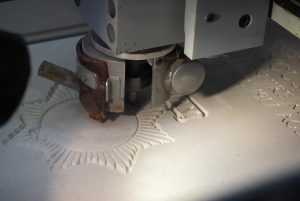
Engraving a new stone with computer controlled drill head.
Where once each gravestone would have had to have been carved by hand. Now modern computer engraving machines can complete the task of one headstone in around an hour. Depending on the wording and the intricacy of the regiment or unit badge concerned.
High Tech Stone Carving Is Now The Way
With a gravestone clamped into the machine, the drill bit spinning at high speed slowly starts work cutting away at the stone. And in many cases its Portland Stone from Dorset that is the most used.
The centre has a dedicated museum covering the extensive work that the CWGC does and its history dating back to the end of the First World War.
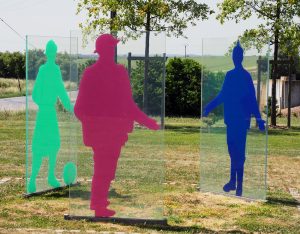
‘Monument to Fraternisation’ where the Christmas football match was played.
Located as it is surrounded by many cemeteries and battle sites there are a number of lovely towns to use as a base for a visit to the museum.
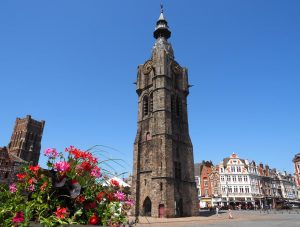
Bethune was wrecked in World War I now a pretty market town.
The whole area is ideal for trying to understand the geography of the War. And how and where some of the battles were fought in and around the area in fact during both world wars.
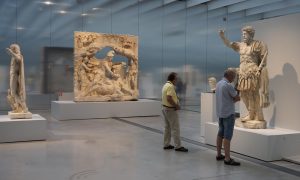
The Louvre Museum in Lens full of highly prized exhibits.
One town about ten miles away was laid waste in the first world war. Bethune and its town square and bell tower, was left in rubble for all of the conflict.
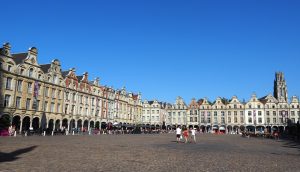
Charming town of Arras in the Pas De Calais
The former mining town of Lens has a satellite version of France’s most famous museum the Louvre. This modern glass edifice holds masses of fine and valuable artworks.

The ultra modern Louvre Museum in Lens .
Vimmy Ridge, a site so very popular with Canadian visitors. It has a tunnel and trench area open for visitors manned mainly by young Canadian students.
Vimmy Ridge Memorial
They tend to be there learn about the history and enhance their skills working for the Veterans Affairs and Ancient Monuments Department in their home country.
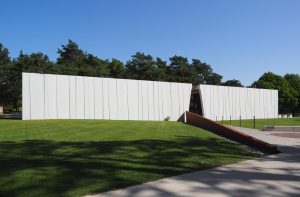
The Vimmy Ridge Museum.
Nearby, monuments and cemetery’s that are within 10 miles of Arras. The largest French cemetery in the world Notre Dame de Lorette, next door to it is the Anneau de la Mmoire, a ‘ring of remembrance’. A large circular series of engraved metal panels listing names in alphabetical order. It names 580,000 of the fallen from the area around Flanders and Artois from 1914 to 1918.
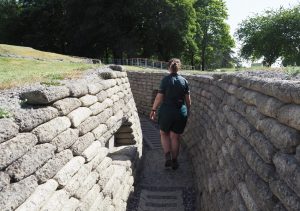
The Vimmy Ridge trenches looked after by the Canadians.
The 14-18 Museum also near to Notre Dame de Lorette is a modern housing a varied collection of military items. This is in a contemporary style with many interactive displays, telling stories of the battle fronts.
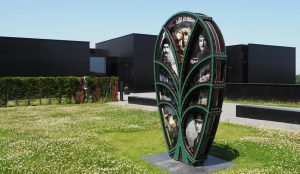
The 14-18 Museum.
Other major cemeteries are at ‘La Targette’. With next door, the ‘Monument to Fraternisation’, which was where the Christmas day football match was played during an unofficial truce.
Ring of Remembrance
Also, a German cemetery from World War I is at The Neuville-St Vaast. It is the largest German cemetery in France, and contains 44,833 burials.
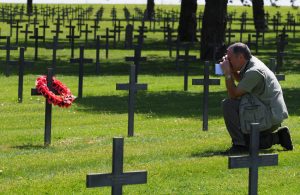
War graves of all nations German cemetery at Neuville-St Vaast.
Returning to Arras is ‘The Arras Memorial’, that commemorates almost 35,000 servicemen from the United Kingdom, South Africa and New Zealand who died in the Arras sector. Between the spring of 1916 and August 1918 and have no known grave.
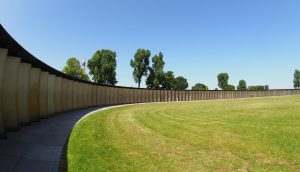
Anneau de la Mmoire the ‘ring of remembrance’.
Reaching the area is easy with almost a pincer movement using Eurostar to Lille. Then hiring a car with a shortish drive north to Arras. Or the other option can be by car ferry to Calais and a short drive south from Calais coming the other way.
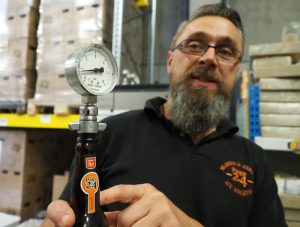
Excellent local beers around the Arras area like Page 24 for example.
As well the CWGC visitors centre the area is also known for good seafood and fresh water fish and its brewing. With local beers very much a good choice. One pot cooking is a style for the region often using the beer too!
There are many excellent hotels in the region. For my stay I used the Mercure Arras Centre Gare Hotel in Arras and the Hotel Lourve in Lens.