

KIHNU ISLAND A UTOPIA IN THE BALTIC SEA
Patriotic these people most certainly are but when it comes to wearing their nation’s colours on a daily basis, well they are somewhat colour blind to that on Kihnu Island!
Their country’s national colours are blue, white and black but it’s the other end of the spectrum that these unique islanders favour.
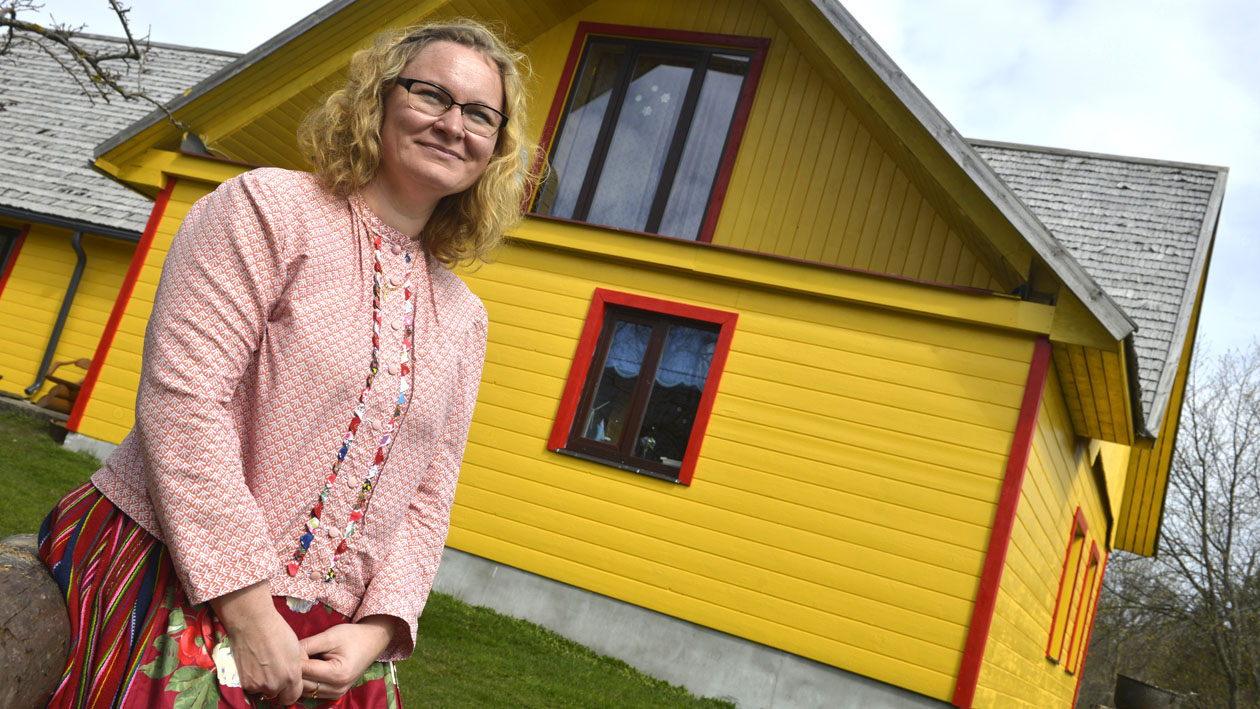
It was the giant red SMEG fridge that rather dominated the kitchen of this striking blonde woman’s timber home on the unique Baltic Island of Kihnu, that was the un-subtle clue.
A 45minute ferry ride over the Gulf of Riga from Estonia mainland got me to the soft sandy soil and pine forested island where red is certainly the flavor of around half of the population, the women that is.

Cookery book author Jana Ruubel who lives on Kihnu Island
The folk tradition of the island has been recognised by UNESCO and this is not some random festival wear that comes out once or twice a year, here it’s their every day wear.
Their unique colourful striped skirts, floral blouses, kitted stocking and patterned aprons are home made and again its not just getting out the sewing machine here they go the whole way and make their skirts on looms mainly during the long dark winter days and nights!

Woman in typical costume on Kihnu Island
Their way of life and customs on Kihnu Island is also part of the UNESCO recognition as the women have generally worked on the land and stayed at home and their husbands away at sea. This way of life has gone on for hundreds of years. The men would go to sea for extended periods either fishing or on sailing ships plying their trade around the Baltic and beyond. Leaving the women to the household chores, the children and tilling the land.

A wedding trunk as given to a Kihnu Island bride
I suspect around the world women would see red under these circumstances but that’s the exact colour that they have chosen for their unique costumes.
Wedding Wooden Trunk
When a woman marries they are given a huge wooden dowry trunk containing handcrafted clothes made by their and old families to set her up in her life. The stripes on the skirts tell a story more red then she is happy, black stripes indicate possibly mourning or a family death. After the death of a partner for instance, darker striped skirt would be worn for many months. The married women wear the aprons and those aprons are often handed down and some women own over a hundred of them!

Some of the women of Kihnu Island in their typical costumes
They search out on trips to the mainland or abroad red cotton printed materials for them and they too get stored in their dowry trunks.
In the past during the winter periods the men would go hunting seals but the islanders are no longer generally involved in a commercial way with that type of hunting now. Spring and summer the Baltic is a great location for herring and this staple fish is highly prized and is sought after by them.
Although the men and women seem to live vastly different lives they do come together for events like weddings and the islanders elaborate and three-day ceremonies are a time when they do. This part of their heritage is also an area of the their folk traditions that have been acknowledged by UNESCO.

A Kihnu Island hunters clothing.
Tourism on Kihnu Island is also important with many day-trippers coming over to experience the music, culture and food of the community.
Getting to the island in the winter is somewhat different, apart from the winter storms and rough seas that can cut the island off for several days at a time but once the really cold weather bites then the sea freezes and its a ten minute drive over the ice to the mainland. Once connected to the shore directly probably makes it easier to make a large purchase for the home from the mainland, like a giant red fridge!
The 600 residents live in small communities scattered all over the 7km long 3.5km wide island, which has a short grass airstrip to provide emergency medical evacuation and there is a medical team on the island most days.

Museum on Kihnu Island
At the centre of the island in Saarekula village lie its school, church and its cultural museum. The church was once a Lutheran but in 1846 the island converted to orthodox and the church on order of Tsar Nicholas was given to the people, an onion style dome was added to the spire to indicate that.
Their museum contains the story of the everyday people the lives they lead, the tools, clothes, furniture their customs and the handicrafts that are handed down by the parents to their children.

Children head off to school on the island
The island grows a great deal of its own food with sheep providing both wool for making their clothes with and providing some very tasty meat to go along with the excellent vegetables that are grown there in the fine sandy soil. The herring of course a regular on the menu too.
Kihnu Island Cookery
Kihnu Island resident and mother Jana Ruubel has written a delightful cookery book but as yet it is not in English. However it looks amazing plus I can say first hand that I have tasted her food which was a knock out three course lunch cooked with that giant red fridge playing a key role host to many of the ingredients that she used that day.
Located in the Gulf of Riga the island does have a 120foot high lighthouse at its southern end to warn the shipping on this rather enclosed almost tide-less sea.

Made in Birmingham UK from cast iron sections.
The all-metal structure was made in Tipton, near Birmingham in the UK and was shipped in pieces to the island where some 151 years ago where it was bolted together and stands proud next to a modern NATO radar station today. It is possible to climb the lighthouse tower on occasions.
There is TV and internet on the island but one does wonder just how long this most fascinating and unique life style will last in this very high tech age?

An all metal lighthouse made in England now on Kihnu Island Estonia
I would highly recommend a visit before this life style and culture disappears forever. Estonia maybe on the edge of Europe but you would never think so and that English is so widely spoken you can leave your phrase book at home.
Regent Holidays http://www.regent-holidays.co.uk offers a seven night tour of Estonia – Essential Estonia – will cost from £650 per person. Other options are a self drive which you could use to drive to Parnu to get the island ferry from there https://www.regent-holidays.co.uk/tour/baltic-fly-drive/